Minimalist Homeschooling: What It Is (and What It Isn’t)
Minimalist homeschooling means keeping only the curriculum, supplies and commitments that actually help your family learn, and giving yourself permission to drop the rest. It isn’t a rule about owning three pencils. It’s about fewer things to manage, so there’s more time and energy for learning together.
This guide is for homeschooling families who feel buried in books, plans and “shoulds”. It also works if your kids go to school and you want less pressure around extras and activities. If you’re new here, our Minimalism with Kids guide covers the bigger picture of living with less as a family.
What minimalist homeschooling isn’t
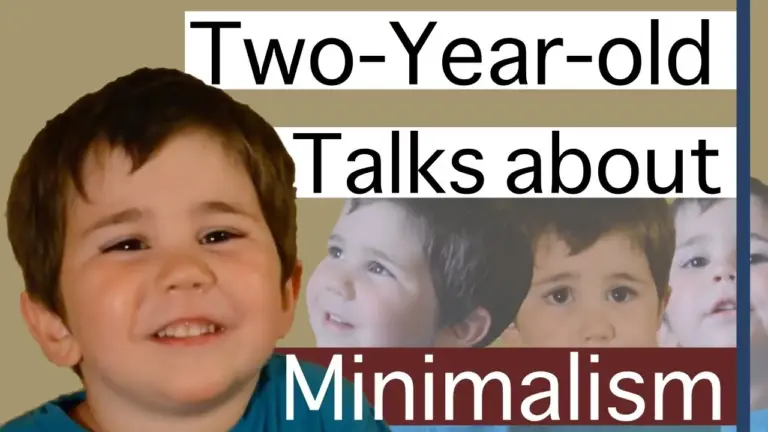
When Mom started looking into minimalist homeschooling, she joined a few online groups and saw photos of homeschool rooms packed with posters, books and curriculum. Her first thought was how exciting it all looked. Her second was how overwhelming it would feel to sit in that room knowing you were supposed to get through all of it in a year.
She wasn’t sure yet what minimalist homeschooling was. But she knew what it wasn’t. It isn’t:
- Doing every subject to completion, every single year, from September to June
- Going on every field trip you possibly can
- Trying to world-school and homestead in the same year
- Burning out
- Pushing your kids until they feel like failures because they didn’t “finish” in a year
If any of those sound familiar, you’re not doing it wrong. You’re probably just doing too much.
No single choice is right for every family
Mom’s point in that video is one worth keeping: there isn’t a minimalist homeschooling decision that won’t be wrong for somebody else. Homesteading can mean buying less, but it takes a lot of time. Traveling to learn is wonderful (we’re world-schoolers at heart), but someone will always have an opinion about it.
So the test isn’t “Is this minimalist enough?” It’s “Is this right for our family, and does it leave us feeling less overwhelmed?”

Permission to skip things: the library card story
Here’s a confession that surprises a lot of homeschoolers: we stopped using a library card.
For Mom, library books came with a lot of pressure. Due dates. Keeping track of who had which book. Worrying about damage or a book going missing. All of it was stealing the joy out of getting books in the first place.
So we stopped. And that simple decision brought a lot of joy to our family. No more tracking due dates. No more worrying about damaged books.
That doesn’t mean libraries are bad. For many families the library is the best free resource in town. The point is that “every good homeschooler must do this” is rarely true. If something costs your family more stress than it gives back, you’re allowed to let it go.
Try this: write down every commitment, subscription and routine your homeschool has. Next to each one, write whether it adds joy, adds stress, or both. Anything that’s mostly stress is a candidate to pause for a term.
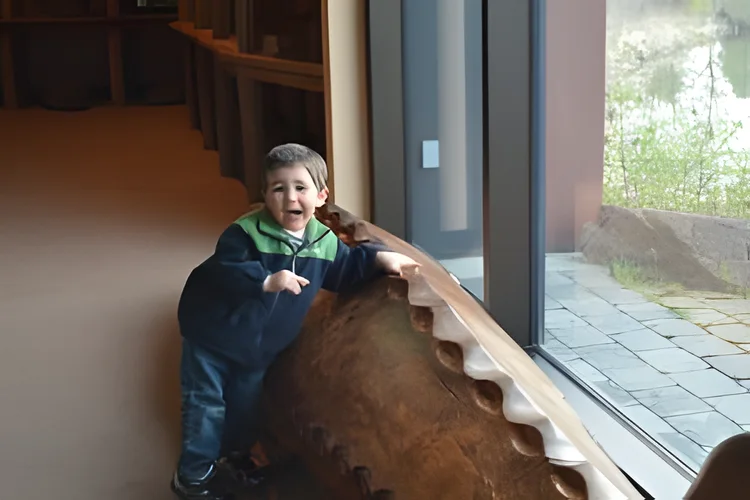
What we do keep: a science-center membership
Minimalism isn’t about having nothing. It’s about keeping what earns its place. For us, that’s a science-center pass.
We keep it for two reasons. First, it’s a place where the kids can run around and have some freedom, and we can happily spend hours there. For Mom, days like that are part of keeping a clear head, especially after a busy week.
Second, we travel. Many science-center memberships include reciprocal admission at other centers, and ours gives us access to science centers and children’s museums across Canada and the US. As Mom puts it, we can hit a city, find a children’s museum even if we’re just passing through, and decompress for a couple of hours.
The best-known version of this is the ASTC Travel Passport Program, run by the Association of Science and Technology Centers. A few things to know before you rely on it:
- It gives free general admission at participating centers. Special exhibits, planetarium and large-screen theater shows usually aren’t included.
- It’s meant for travel. Centers within 90 miles (straight-line distance) of your home, or of the center where you bought your membership, are excluded.
- Not every membership level qualifies, and participating centers change, so check the current list.
- Bring your membership card and ID, and call ahead to confirm.
Does this mean you need a science-center pass? Absolutely not. It works for us because we travel and our kids love hands-on exhibits. Your “keep” might be a pool pass, a nature center or nothing at all.
One more honest note: minimalist kids are still normal kids. Ours still asked for things in the gift shop while Mom was filming that video. Decide your gift-shop answer before you walk in (“We’re just looking today” or “You can use your own money”) and it gets much easier.
Field trips: fewer, better, planned
Going on every possible field trip is on Mom’s “isn’t” list for a reason. It’s exhausting, and it fills the calendar with driving.
A simpler approach:
- Pick one or two outings a month, not one a week.
- Choose places you can return to, where kids can go deep instead of rushing through.
- Before you go, check restrooms, food rules and how easy the layout is with little ones. Our family attraction checklist walks through what we look for.
- Leave room afterward to talk, draw or build something from what you saw.
Owning less gave us time for hands-on projects
Here’s the part that makes it all worth it. Because we removed so many possessions we used to spend time looking after, we had the freedom and the time for the things we really want to do.
For us that means hands-on, immersive projects. Some of them don’t look minimalist at all. But they’re how our family likes to learn: by getting right in there and doing it.
That’s the trade. Less time tidying, sorting and managing stuff. More time for the kind of learning your kids will remember. If your school space is overflowing with toys and supplies too, toy rotation is an easy way to free up room and attention.
Dealing with guilt from groups and social media
Even after many years of homeschooling (Mom recorded the memberships video in her 13th year), the guilt still shows up. Someone posts that a library membership is essential. A magazine lists what “successful” homeschoolers do. A group thread makes you feel behind.
Mom’s suggestion is simple: step back.
- If the magazines are getting to you, stop reading them for a while.
- If a Facebook group makes you feel guilty, take a break from it. The people there mean well. They’re sharing what works for them.
- Find creators and friends who help you feel confident, and let them cheer you on.
Give yourself freedom and permission to do what’s best for your family. And if your kids go to school, the same idea applies to activities, extras and commitments. If it doesn’t work for you, drop it.
A minimal homeschool supply list (printable)
You need far less than the catalogs suggest. Start with this, then add only when a real need shows up.
- ☐ Pencils, a sharpener and erasers (one small cup, not a drawer)
- ☐ Colored pencils or crayons (one set per child)
- ☐ Lined paper and plain paper
- ☐ One notebook or binder per child per year
- ☐ Glue stick, scissors and tape
- ☐ A ruler
- ☐ Core books for reading, writing and math
- ☐ A world map or globe
- ☐ A basic calculator for older kids
- ☐ A calendar or planner for the family
- ☐ One bin per child for current work
- ☐ A shared device with internet, if your curriculum needs it
Other things we genuinely use: ______________________
The “do we need this?” test for curriculum and memberships
Before you buy a curriculum, sign up for a class or renew a membership, run it through these questions:
- Will we use it this term? Not “someday”. This term.
- Does it fit how our kids learn? A beautiful workbook is clutter if your kids learn by building.
- Can we borrow, share or use something we already have?
- What will it cost in time? Driving, prep, tracking and cleanup count too.
- Does it add joy or pressure? Be honest, like the library card.
- Would we miss it? If you paused it for a month, would anyone notice?
- Where will it live? If there’s no space on the shelf, something else has to go.
If a membership only passes because “everyone says you have to,” that’s your answer.
Keep school materials to one hutch or shelf
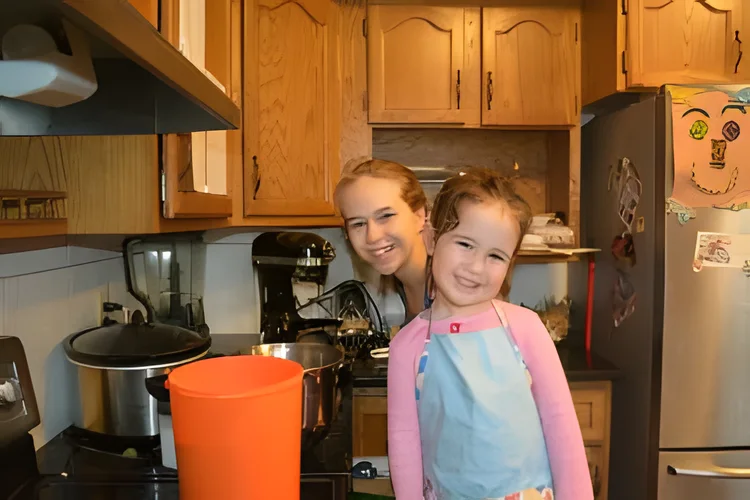
Our old school room used to be the messiest room in the house. Now it holds just a piano and a hutch of schoolbooks, and it takes about five minutes to clean.
To get there:
- Give school one home. One hutch, bookcase or shelf. When it’s full, it’s full.
- Keep only this year’s materials out. Store next year’s books out of sight, or better, buy them when you need them.
- Pass on finished curriculum. Sell it, give it to another family, or donate it once your youngest is done.
- Keep a small portfolio. Save a few best pieces per child per year, not every worksheet. Take photos of big projects.
- Declutter together. Kids can sort their own papers with the Yes, No, Maybe method from how to declutter with kids.
Common questions
It’s homeschooling with only the curriculum, supplies and commitments that truly serve your family. The goal is less to manage and less pressure, so there’s more time for real learning.
No. Many families love the library, but if due dates and tracking books cause more stress than joy, it’s fine to skip it. We did, and it made our homeschool happier.
Yes. The same questions apply to extracurricular activities, extra commitments and school supplies. Keep what helps, and drop what steals the joy.
Free printable
Declutter in a Weekend
Eight 45-minute sessions, Saturday and Sunday, as a two-page checklist. We'll also send a few short emails with our best family minimalism guides. Unsubscribe any time.
The form didn’t load in your browser (ad blockers and privacy settings can block it). Open the signup form in a new tab.
Nothing happens when you press the button? Sign up on our MailerLite page instead.