The One In, One Out Rule: How to Keep Clutter from Coming Back
The one in, one out rule is simple: every time something new comes into your home, one similar item goes out. Buy a new sweater, donate an old one. Get a new toy, pass one on. Your home stays the same size instead of slowly filling up again.
It’s the easiest way to protect the work you’ve already put into decluttering, and it’s simple enough for kids to follow. Here’s how to apply it by category, a few useful variations, and how to make it stick with children.

What is the one in, one out rule?
It’s a maintenance habit, not a decluttering method. Decluttering gets your stuff down to a level you’re happy with. One in, one out keeps it there.
The rule works best when “one out” means the same kind of thing. A new pair of shoes means a pair of shoes leaves, not a random mug. That keeps each category, and each drawer, shelf and bin, at a steady size.
It also has a quiet side effect: it makes you think before you buy. If getting a new item means choosing which old one to give up, you’ll often decide you don’t need the new one after all. That pause is the heart of our guide on how to stop impulse buying, which has the three questions Andrea asks before buying anything.
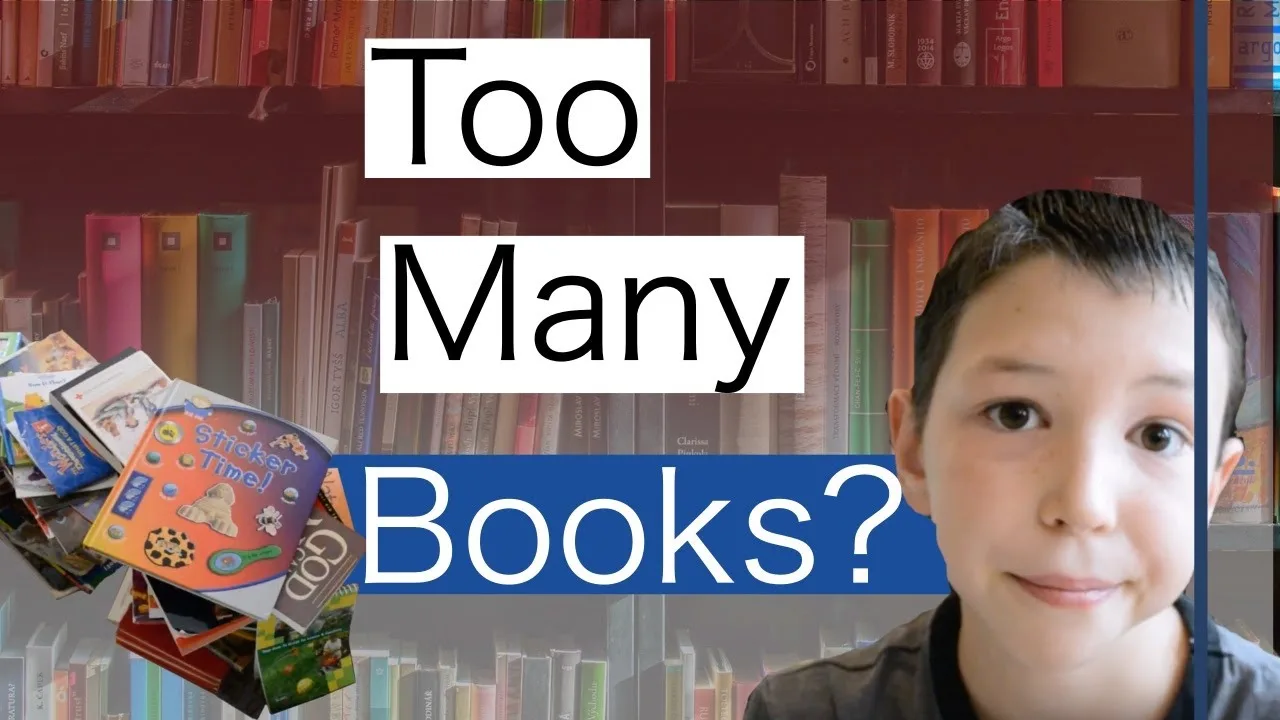
Watch our video: The Purging Line (Books Edition).
How to start the one in, one out rule
- Declutter first, at least a little. The rule holds a level steady. If that level is “overflowing,” start with a quick pass through the category. Our guide on where to start decluttering can help.
- Pick one or two categories to start. Clothes and toys are the easiest to see results with.
- Set a donation spot. A bag or box by the door, in the garage or in a closet. When something new comes in, the “out” item goes straight there.
- Make the swap right away. Do it the day the new item arrives, before the tags are off or the box is recycled. Later never comes.
- Empty the donation box regularly. Drop it at a thrift store or donation center once it’s full, or on a set day each month.
One in, one out by category
| Category | What “one out” looks like | Tip |
|---|---|---|
| Clothes | A new shirt means a shirt leaves; new shoes mean a pair of shoes leaves | Keep a donation bag in each closet. Outgrown kids’ clothes don’t count as the “out”; they were leaving anyway |
| Toys | A new toy means one toy of similar size leaves | Do the swap when gifts arrive, not weeks later |
| Kitchen | A new pan, gadget or mug replaces an old one | Watch for duplicates: two vegetable peelers, ten travel mugs |
| Books | A new book means one book is passed on | Library books don’t count, which is one more reason to use the library |
| Linens and towels | New set in, oldest set out | Worn towels can go to an animal shelter if they accept them; call first |
| Bathroom and beauty | New product opened only when the old one is used up | Not really “one in, one out” but “use up, then replace” |
Clothes
Clothes are where the rule shines. Before you buy something new, decide which item it’s replacing. If you can’t pick one, that’s a sign you may not need it. For kids, growth spurts naturally clear out a drawer, so apply the rule to extras: a fifth hoodie, a third pair of sneakers.
Toys
Toys come in from everywhere: birthdays, holidays, party favors, grandparents. The rule gives you a calm, predictable way to handle it. When a new toy arrives, your child chooses one to pass on. Similar size is a good guide: a new building set means a bigger toy goes, not a single sticker.
When our family moved out of our house, one of the payoffs was no more mountains of toys to put away every night. A steady number of toys is what makes that possible.
Kitchen
New gadgets are tempting, and old ones rarely leave on their own. When you bring home a new appliance or tool, ask what it replaces. If the answer is “nothing, it’s a new thing we’ll use,” that’s fine, but then ask what else in the kitchen hasn’t been used in six months. Andrea uses that same six-month test for their own things: if you haven’t used it in six months, you’re unlikely to use it in the next six.
Books
Book lovers often find this one hardest. Try a simple limit: one shelf for each person, or one bin of kids’ books per child. When the shelf is full, a new book means an old one goes to a friend, a classroom, a neighborhood book box or a donation center.
Variations on the rule
The basic rule keeps things level. These variations help if you want your home to keep getting lighter, or if counting items feels fussy.
- One in, two out. For every new item, two leave. Use this during a season when you’re actively decluttering, or in a category that’s still too full.
- The container limit. Instead of counting items, give each category a fixed space: one toy bin per child, one drawer for T-shirts, one shelf for books. If it doesn’t fit, something goes. This is often the easiest version for kids, because they can see when the bin is full.
- Two out before one in. The “out” items have to leave before you buy the new one. This works well as a brake on impulse purchases.
Making one in, one out work with kids
Kids understand fairness, and this rule feels fair: something new, something goes. A few ways to make it easy:
Use Yes, No, Maybe. Our family uses Yes, No, Maybe for everything when decluttering, and it’s easy for younger kids to grasp. When a new toy arrives, sort the old toys: Yes means it adds value to my life, so it stays. Maybe means it may not add value to me, but it might to someone else. No means it doesn’t add value to anyone in the house, so if it’s still good, it’s given away or sold. The “out” item usually comes from the Maybe or No pile.
Let little ones carry. Young kids often want to help with whatever the big people are doing. Let them carry the “out” item to the donation box. It gives them a job and makes the swap feel like part of the fun.
Let them choose. Offer a choice of two or three items if picking from a whole bin feels too big. The more they choose, the more the habit belongs to them.
Use the words. Try: “Your new book needs a spot on the shelf. Which book is ready to go to another kid?” Or: “The bin is full. What should we pass on so the new truck has room?”
Set expectations before gifts arrive. Before a birthday or holiday, remind them: “When new toys come in, we’ll pick some to pass on so everything fits in your bin.” No surprises means fewer tears.
When the one in, one out rule doesn’t work
The rule is a great tool, but it isn’t right for every situation.
- When the house is already overflowing. Holding a messy level steady just keeps it messy. Declutter first, or use one in, two out for a while.
- When you’re replacing, not adding. A broken kettle replaced by a new one isn’t a “one in,” it’s a swap. Don’t hunt for an extra item to toss.
- For consumables. Food, toiletries and craft paper get used up. “Use up, then replace” works better.
- For growing kids. Children need new sizes and new stages. Outgrown clothes and baby gear leave naturally; you don’t need a second “out” for each new size.
- For collections that matter. If a hobby or collection genuinely adds value, give it a container limit instead of counting.
- When it becomes an excuse to buy. “I donated one, so I can buy one” can turn the rule into a shopping license. If that’s happening, add a waiting period or try a no-spend challenge to reset.
Your one in, one out checklist
- ☐ Choose one or two categories to start
- ☐ Do a quick declutter of those categories first
- ☐ Set up a donation box or bag
- ☐ Decide on your version: one in, one out; one in, two out; or a container limit
- ☐ Explain the rule to the kids and agree on how they’ll choose
- ☐ Swap the day a new item arrives
- ☐ Empty the donation box once a month
- ☐ Check in after a month: is the category staying the same size?
Free printable
Declutter in a Weekend
Eight 45-minute sessions, Saturday and Sunday, as a two-page checklist. We'll also send a few short emails with our best family minimalism guides. Unsubscribe any time.
The form didn’t load in your browser (ad blockers and privacy settings can block it). Open the signup form in a new tab.
Nothing happens when you press the button? Sign up on our MailerLite page instead.